The world needs this T shirt
September 13th, 2009“Who told you that the argument from authority was always wrong?”
Posted in Blather | 3 Comments »
“Who told you that the argument from authority was always wrong?”
Posted in Blather | 3 Comments »
This is part of what may become a sort of series; notes on the difficulties presented by some of the books I am reading. In particular, they are examples of the discomfort I feel when I know what something means but I don’t know how to translate it.
Tove Jansson is a writer who ought to be easy. Her meaning is always clear and she uses simple declarative sentences that consist of nothing but the proper words in their proper places. But the balance and rhythm of her sentences is almost impossible to reproduce. They just take a different route to their end than is possible in English. How to translate this into English, a language which wouldn’t let you put words in the same order, even if they had the same sounds?
I know that her stories and her characters carry over. But there is a rhythm and a tension to her style that just doesn’t. Swedish is a stiff and rather weighty language: English is by contrast light and floppy. Trying to preserve the rhythm of Swedish in English feels like trying to fly cast with string.
Here are the last paragraphs of “Fair Play”, in Swedish, with the tricky bits marked up:
Jonna utbrast: Visst förstår jag! Och hon gav sig in i en lång ivrig utredning om illustrationens betydelse, det omsorgsfulla arbetet, koncentrationen, behovet av att få vara ostörd för att få ett gott arbete till stånd.
Mari lyssnade inte så noga, en äventyrlig tänkbarhet höll på att ta form; möjligheten av en alldeles egen ensamhet i frid och förväntan, nästan ett slags lustighet som man kan tillåta sig när man är välsignad med kärlek.
Here’s a more or less literal translation, written out anachronistically after the notes that follow it.
Jonna burst out: “Of course I understand!” and she threw herself into a long and eager disquisition on the importance of illustration, the painstaking labour, the concentration, the need to be undisturbed so as to get a good piece of work done.
Mari listened without attention; a world of bold thoughts began to form: the possibility of a solitude all her own in peace and anticipation, almost a kind of delight which you can allow yourself when you are blessed with love.
Perhaps because I am not a native Swedish speaker I find that even the simplest words in it are, so to say, unclichéd, unknotted and spread out for my admiration when they are well used. “Omsorgsfull” translates almost directly as “careful” but when I hear “careful” I hear its primary meaning as an injunction: “Be careful!” or “Watch out”; what I would, as a parent in Swedish, have expressed as “Akta!”; whereas the Swedish word has for me connotations of taking care, of patient painstaking lovingness.
Utredning is an enquiry; usually used of a government or other official enquiry. In this context I suppose I would use “disquisition”; the point, of course, is that Jonna is flung away from the moment of emotional communication: what she “of course understands”, which is that she is free to go to Paris and talks instead of something “officially” admissible. I have no idea how to pack all that into one word of English.
An äventyrlig tänkbarhet is more obviously difficult, and possibly easier. It’s a bold, or an adventurous, thinkableness. It’s what stout Cortez saw. “A world of brave new thoughts” perhaps. Nah, that’s wrong. It’s a very Mumin moment, though this is not of course a Mumin book.
And then of course there are the repeated alliterations of the next sentence: egen ensamhet i frid och förväntan, though the last two es of alldeles also belong in this run of sound. The sense is clear: “a solitude of her own, in peace and anticipation”. And it’s fine. But there is still something missing.
That’s taken me about an hour: time well spent, but hardly well paid. I feel a weight of responsibility for all the translators on whom I must sit in judgment over the next two months.
For reference, here’s Thomas Teal’s version:
“Of course I do!” Jonna burst out, and she launched into a long, earnest discussion of the importance of illustration, the painstaking labour, the concentration, the need to be undisturbed if you’re going to do your best work.
Mari was hardly listening. A daring thought was taking shape in her mind. She began to anticipate a solitude of her own, peaceful and full of possibility. She felt something close to exhilaration, of a kind that people can permit themselves when they are blessed with love.
“Peaceful and full of possibility” preserves the alliteration very nicely and brings out the sense.
Enough. I need to earn a living.
Posted in Literature, Sweden | 4 Comments »
From the description that sold Unix to the wider world:
The PDP-11/70 on which the Research Unix system is installed is a 16-bit word (8-bit byte) computer with 768K bytes of core memory; the system kernel occupies 90K bytes about equally divided between code and data tables. This system, however, includes a very large number of device drivers and enjoys a generous allotment of space for I/O buffers and system tables; a minimal system capable of running the software mentioned above can require as little as 96K bytes of core altogether. There are even larger installations; see the description of the PWB/UNIX systems [4, 5], for example. There are also much smaller, though somewhat restricted, versions of the system [6].Our own PDP-11 has two 200-Mb moving-head disks for file system storage and swapping. There are 20 variable-speed communications interfaces attached to 300- and 1200-baud data sets, and an additional 12 communication lines hard-wired to 9600-baud terminals and satellite computers. There are also several 2400- and 4800-baud synchronous communication interfaces used for machine-to-machine file transfer. Finally, there is a variety of miscellaneous devices including nine-track magnetic tape, a line printer, a voice synthesizer, a phototypesetter, a digital switching network, and a chess machine.
Posted in Blather | No Comments »
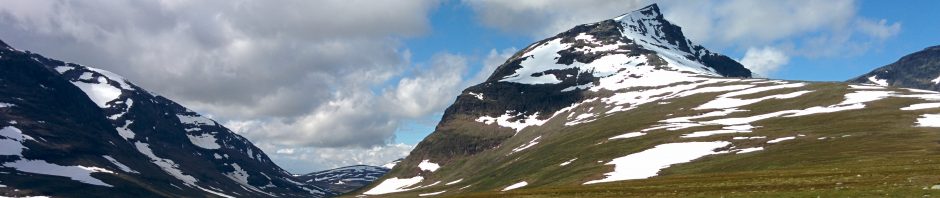
is investigating a story that Louise sent me about the International Society of Arctic Char fanatics, and their struggles against some horrible development in Scotland. Better yet, I could be fishing for char (röding) because despite living for years in the southern reaches of countries where they are found I have only ever caught one in my whole life, and that was in Lake Bohinj, in Slovenia, where I didn’t know they existed until one grabbed my fly.
Instead, though, the bits of the next two months that aren’t spent doing journalism will be taken up with reading. I am a judge this year for the Bernard Shaw prize for translation out of Swedish to English, and they have just sent me the entries:
Apologies for grotty cameraphone picture: never mind the quality, marvel at the height.
Posted in Blather, Literature, Sweden, Trouty things | 3 Comments »
I’ve been running both the laptop and the desktop on various flavours of Ubuntu for about six months now, which is time enough to get an informed opinion. This wasn’t a deliberate decision. I started with Xubuntu on the laptop, an IBM X40, because I was sick to death of XP’s erratic performance when switching between wireless networks and the a 3G dongle. It would interrupt me every two or three minutes with a demand or suggestion that it switch to one or the other, and in the Guardian’s confused wifi environment this was intolerable. Read the rest of this entry »
Posted in Blather | 13 Comments »
I picked up in Stockholm the latest Swedish crime sensation, Aldrig Fucka Upp (Aldrig means “Never”; the rest is quite easy for English speakers to work out). The author is a criminal lawyer in Stockholm, Jens Lapidus; it’s set in and around the immigrant criminal underground. It is written. In short sentences: men like them. Fuck. Yeah.
Grunt.
Actually, the language is the most credible part of it. The gangster characters speak a Swedish argot with some turkish or arabic terms, but mostly full of American gangster slang. The word “blatte” (more or less “Nigger”) gets used a lot. Much of this sounds wholly credible to my ears, as does the scene where a woman probation officer is talking to a criminal uninterested in mending his ways.
But the rest is just a mess of stereotypes. The author was recommended me by a very aristocratic Swedish banker who took me to lunch at Brooks’s club to discuss FiU, and who said that it was the only treatment he knew of the immigrant criminal class, though he was thinking of the earlier book Snabba Cash. I still haven’t read that, and nothing in Aldrig Fucka Upp makes me want to: of the three main characters, two are pure recycled cardboard—the Swedish mercenary who has come back from Iraq with PTSD, and the Joseph Wambaugh style cop who is bitter, thuggish, a but crooked, but really hates criminals and will, I can see, team up with the unlikely buddy from the Internal Affairs division. So why should I believe in the blatte gangster?
Obviously, the popularity of these books tells me an immense amount about what Swedes think of their own society and of crime and immigrants. Equally, the fact that no one else has written about the subject (correct me if I’m wrong) is also telling. But I wish I could rely on what was being said, and I can’t.
Posted in Blather, Sweden | 1 Comment »
Swedish Railways runs some lovely sleepers which are, I think, the best way to get up to the north; and when you factor in the cost of a hotel room, they are also as cheap as flying and spending the night. What I learned this trip is that it is more comfortable, as well as cheaper, to take an entire three-bed second class carriage to yourself than to book a single-berth first class carriage. This is because the first-class carriage squeezes in the world’s smallest shower and loo; both are too small, especially the shower, and this means that everything else in the compartment is also too small. Not worth the extra money. In second class, you have to walk down the corridor for these amenities, but the carriage is much more spacious, and the tracks up north, unlike the ones to Östersund the last time I took that train, are really quiet and conducive to deep sleep.
One nice touch: as we were pulling out of Luleå I realised that I had left my English mobile charging in the ticket hall and the conductor stopped the whole train so I could run back and get it. Compare this to the archetypal Stockholm experience of running onto the tube platform to see the driver shutting the doors just as you arrive at them, and then watching your gesticulations curiously before turning to face ahead again and pulling out of the station.
Posted in Sweden, Travel notes | No Comments »
I spent last week rushing around Sweden, mostly to places I had lived in or visited before, as part of a Radio Four Crossing Continents programme which will go out in early September. The rest of the series is full of dramatic politics, but you won’t find those in Sweden at the best of times, and certainly not in late July when the entire country has more or less shut down. So we have elk carcasses, fiddle music, and sociologists explaining the term of art that is Fucking Åmål Syndrome.
Perhaps the most important discovery is that two weeks dead adolescent elk, with a stomach cavity that looks like a heaving risotto of maggots, actually smells worse than the air freshener in a Saffron Walden minicab. Further research is needed to establish whether I would rather share the taxi with an elk that has only been dead for a week.
Posted in Blather, Sweden, Travel notes | No Comments »
I climbed from the bottom of the lecture theatre in the Law building in Cambridge to find at the top of the stairs, Professor Dennett, who engaged my companion in conversation. He was, he said, working on a research project to interview in depth and anonymously six atheist ministers of religion about the difficulties of their lives.The pressure they were under to conceal or distort their opinions was immense. They were so brave …
I broke in at this stage to say that I didn’t think it was particularly brave of them to make their livings denying what they believe to be true.
Oh, he said. But they are so brave to talk to us.
In any case, I tried to get him to write for the Graun about “belief in belief” next week. I imagine I have failed, but will in any case send an email.
Tags: God
Posted in Blather | 1 Comment »
I would imagine Jesus was a kind of Jewish reformer. If you were looking for an equivalent to the figure you dimly perceive through the gospels it would probably be a Richard Dawkins.A C Grayling.
Posted in Blather | 3 Comments »